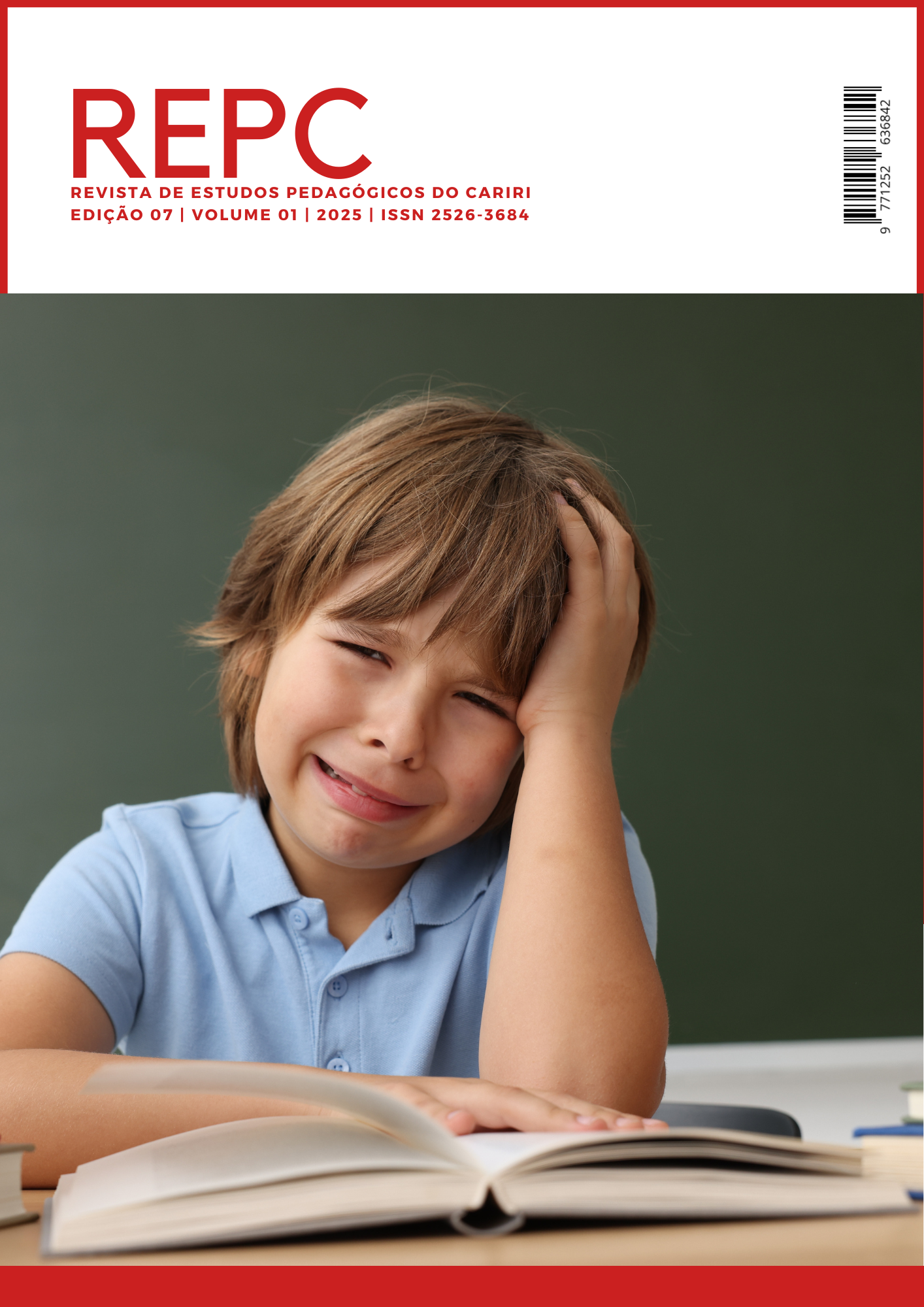
Os malefícios da escolarização precoce
Uma análise crítica dos impactos no desenvolvimento infantil
DOI:
https://doi.org/10.5281/zenodo.23516623Parole chiave:
Escolarização precoce, Desenvolvimento infantil, Primeira infância, Neurociência educacional, Políticas educacionaisAbstract
Examinam-se os malefícios da escolarização precoce no desenvolvimento infantil, analisando evidências empíricas e teóricas que questionam a antecipação do ingresso formal na educação. A pesquisa investiga os impactos negativos da pressão acadêmica prematura sobre o desenvolvimento cognitivo, socioemocional e físico das crianças. Por meio de uma revisão bibliográfica abrangente, o estudo analisa pesquisas internacionais que demonstram como a escolarização precoce pode comprometer o desenvolvimento natural da criança, interferir nos processos de maturação neurológica e prejudicar a motivação intrínseca para aprender. Os resultados indicam que a antecipação da escolarização formal, especialmente antes dos 6-7 anos, pode gerar consequências adversas duradouras.
Downloads
Riferimenti bibliografici
BASSOK, D. et al. Is kindergarten the new first grade? AERA Open, v. 2, n. 1, p. 1-31, 2016.
CASEY, B. J. et al. Imaging the developing brain: what have we learned about cognitive development? Trends in Cognitive Sciences, v. 9, n. 3, p. 104-110, 2005.
DECI, E. L.; RYAN, R. M. The "what" and "why" of goal pursuits: human needs and the self-determination of behavior. Psychological Inquiry, v. 11, n. 4, p. 227-268, 2000.
DIAMOND, A. Executive functions. Annual Review of Psychology, v. 64, p. 135-168, 2013.
EASTON, F. Educating the whole child, "head, heart, and hands": learning from the Waldorf experience. Theory into Practice, v. 36, n. 2, p. 87-94, 1997.
EDWARDS, C. et al. The hundred languages of children: the Reggio Emilia experience in transformation. 3. ed. Santa Barbara: Praeger, 2012.
ELKIND, D. The power of play: learning what comes naturally. Cambridge: Da Capo Press, 2007.
GOGTAY, N. et al. Dynamic mapping of human cortical development during childhood through early adulthood. Proceedings of the National Academy of Sciences, v. 101, n. 21, p. 8174-8179, 2004.
GRAY, P. The decline of play and the rise of psychopathology in children and adolescents. American Journal of Play, v. 3, n. 4, p. 443-463, 2011.
GRAY, P. Free to learn: why unleashing the instinct to play will make our children happier, more self-reliant, and better students for life. New York: Basic Books, 2013.
HIRSH-PASEK, K. et al. A mandate for playful learning in preschool: presenting the evidence. New York: Oxford University Press, 2009.
KAGAN, S. L. et al. Early childhood assessment: why, what, and how. Washington, DC: National Education Goals Panel, 2008.
KIM, K. H. The creativity crisis: the decrease in creative thinking scores on the Torrance Tests of Creative Thinking. Creativity Research Journal, v. 23, n. 4, p. 285-295, 2011.
KNIGHT, S. Forest school and outdoor learning in the early years. 2. ed. London: SAGE Publications, 2013.
KNUDSEN, E. I. Sensitive periods in the development of the brain and behavior. Journal of Cognitive Neuroscience, v. 16, n. 8, p. 1412-1425, 2004.
KOHN, A. The case against standardized testing: raising the scores, ruining the schools. Portsmouth: Heinemann, 2000.
MARCON, R. A. Moving up the grades: relationship between preschool model and later school success. Early Childhood Research & Practice, v. 4, n. 1, p. 1-24, 2002.
PELLEGRINI, A. D. The role of play in human development. New York: Oxford University Press, 2009.
PIAGET, J. To understand is to invent: the future of education. New York: Grossman Publishers, 1973.
RAVER, C. C. et al. CSRP's impact on low-income preschoolers' preacademic skills: self-regulation as a mediating mechanism. Child Development, v. 82, n. 1, p. 362-378, 2011.
SAHLBERG, P. Finnish lessons: what can the world learn from educational change in Finland? New York: Teachers College Press, 2011.
SCHWEINHART, L. J. et al. Lifetime effects: the High/Scope Perry Preschool study through age 40. Ypsilanti: High/Scope Press, 2005.
SOBEL, D. Place-based education: connecting classrooms & communities. Great Barrington: The Orion Society, 2004.
STIPEK, D. et al. Effects of different instructional approaches on young children's achievement and motivation. Child Development, v. 66, n. 1, p. 209-223, 1995.
UNICEF. Child poverty in perspective: an overview of child well-being in rich countries. Florence: UNICEF Innocenti Research Centre, 2007.
VYGOTSKY, L. S. Mind in society: the development of higher psychological processes. Cambridge: Harvard University Press, 1978.
##submission.downloads##
Pubblicato
Come citare
Fascicolo
Sezione
Categorie
Licenza
Copyright (c) 2025 2025

Questo lavoro è fornito con la licenza Creative Commons Attribuzione - Non commerciale - Non opere derivate 4.0 Internazionale.
